On January 27, 2025, the Trump Administration released a memo pausing federal funding for grants, loans, and financial assistance programs tied to initiatives they claim advance “Marxist equity,” “woke gender ideology,” and “radical government DEI programs.”
U.S. District Judge Loren L. AliKhan blocked the funding freeze just minutes before it was set to take effect. The administrative stay, issued in response to a lawsuit filed by nonprofit groups that receive federal funding, will remain in place until after a court hearing on February 3, 2025 to further address the issue.
Chess Moves
This move by the Trump Administration is presented as a way to protect taxpayer dollars and focus on “hardworking American families.” But if we peel back the layers of this memo, it becomes clear that this isn’t just about budget cuts or efficiency—it’s a targeted attack on diversity, equity, and inclusion (DEI) under the guise of protecting traditional values.
Trump administration officials assured that direct assistance programs for Americans, such as Medicare, Medicaid, Social Security, student loans, and food stamps, would not be affected. However, many overlook that much of the support we receive isn’t direct government-to-recipient assistance, but rather government-to-entity funding, which is then distributed by those entities to individuals. For example, federal grants often go to state agencies or nonprofits, which then allocate the funds through various programs and services. Nonprofits supporting underserved communities, like unbanked workers, disability-owned businesses, or special needs children, rely on these grants to assist those in need.
These nuances are often hidden in the vague, yet strategic, wording of this memo, and memos like it, and that is because many entities and organizations that receive federal funding will take a major hit, and the millions of Americans they serve will be collateral damage, all because the mission of this aimed attack is a broad sweep to turn back the clock, pre-1960s, and eliminate through defunding and chaotic destabilization, clean climate initiatives, protections for transgender people, and DEI efforts — all of which will have a negative global impact.
What Is DEI, Really?
Before diving into the implications of this memo, it’s important to clarify what diversity, equity, and inclusion (DEI) truly mean—and what they don’t. Too often, these terms are misrepresented to provoke fear or misunderstanding. At their core, DEI principles are about ensuring fair opportunities for everyone to thrive, no matter their background or circumstances or where they live.
How Attacks on DEI Target People of Color—and More
The attack on DEI is a direct attack on people of color—Black people especially—as these initiatives challenge long-standing systems of racial exclusion and inequity. Ironically, some non-Black people of color may be unaware that they, too, benefit from DEI efforts. Misunderstanding DEI as mere Black tokenism, they may not realize that they are also being targeted by broad-stroke policies designed to dismantle equity for all marginalized groups.
By labeling DEI as “wokeness” or “Marxist equity,” detractors aim to stoke fear and discredit efforts that address systemic racism, historical injustices, and the need for representation in education, the workplace, and beyond.
However, these attacks are not just harmful to people of color. Whether out of ignorance or intent, the critics of DEI also harm other groups who benefit from these principles:
- Women – Particularly in male-dominated industries, where DEI helps address gender bias, pay gaps, and leadership opportunities.
- LGBTQ+ Individuals – DEI fosters protections against workplace discrimination, healthcare inequities, and social marginalization.
- People with Disabilities – DEI promotes accessibility, accommodations, and equal employment opportunities.
- Religious Minorities – Including Muslim, Jewish, Sikh, and other non-Christian groups who rely on DEI protections against discrimination and bias.
- Immigrants and First-Generation Americans – DEI helps mitigate language barriers, xenophobia, and employment discrimination.
- Low-Income and Working-Class Individuals – DEI initiatives advocate for fair wages, economic mobility, and workplace protections.
- Rust-Belt & Blue-Collar Workers – Many of whom have been impacted by offshoring, automation, and job loss but may not realize how DEI initiatives support workforce retraining and economic reinvestment.
- Recovering Addicts – DEI helps combat employment discrimination and ensures access to equitable healthcare and support systems.
- Older Workers – Who face ageism in hiring and promotion opportunities but benefit from DEI efforts addressing workplace bias.
- Veterans – DEI promotes reintegration into the workforce and accommodations for service-related disabilities.
- Neurodivergent Individuals – DEI encourages workplace policies that recognize and accommodate diverse ways of thinking and processing information.
Many people in these groups may not realize they are being harmed by anti-DEI rhetoric, as they either assume DEI only benefits one particular group (often Black Americans) or have been misled into believing that equity initiatives work against them rather than for them. By attacking DEI, critics undermine progress for these groups while continuing to reinforce systemic barriers, whether they realize it or not.
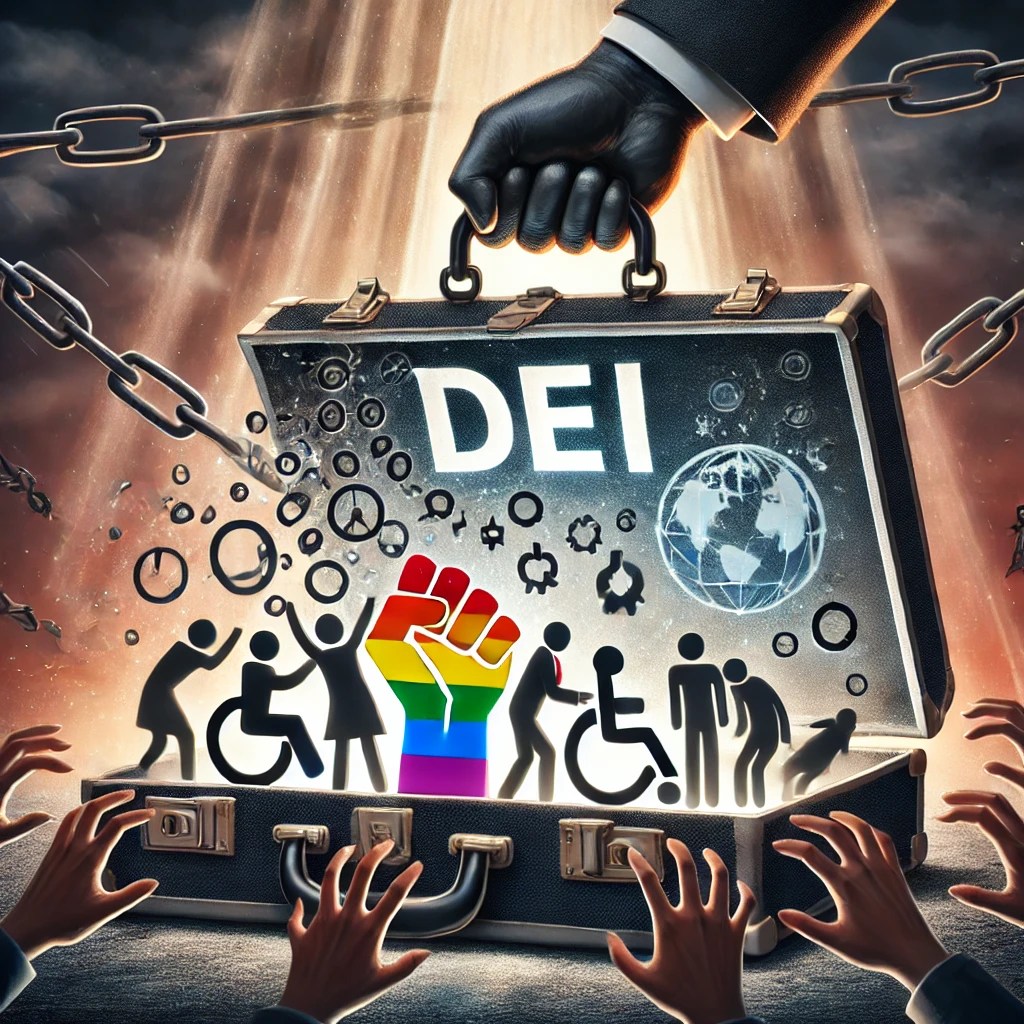
Diversity, Equity, and Inclusion—What They Really Mean
Let’s break down the core principles of DEI to better understand why they are vital:
Diversity is the presence of differences in any given setting, including race, ethnicity, gender, age, ability, education, and socioeconomic status. It’s about recognizing and valuing unique perspectives. For example:
- Veterans bring leadership skills shaped by their service, but their experiences are often overlooked.
- People with disabilities represent a wide array of talents but are frequently excluded due to inaccessible workplaces. Ableism is a significant issue that unfortunately keeps people with disabilities as the most unemployed group in the U.S.
- Rural communities bring unique insights about industries like agriculture or manufacturing but are often excluded from policymaking discussions.
Equity ensures resources and opportunities are distributed to remove barriers for those who face systemic challenges. It’s about addressing specific needs rather than treating everyone the same, which is the aim of equality, that many confuse as equity. For example:
- Older workers face stereotypes that hinder their advancement, but equity-driven retraining programs can help them remain competitive in the workforce.
- People living in poverty benefit from equitable education initiatives that offer scholarships or free training programs to open doors.
- Workers without college degrees need pathways to jobs that value skills and experience over academic credentials.
Inclusion ensures that diverse voices are not just present but empowered. It’s about creating environments where everyone feels valued, accepted as they are, and has a role where their voice is heard and opinions matter. For example:
- People with disabilities need not only physical accommodations but also cultural acceptance to thrive in workplaces.
- Women in STEM fields need inclusive cultures that eliminate gender biases and provide equal opportunities for advancement.
The Broader Consequences of Attacking DEI
When DEI is dismissed as “radical” or “wasteful,” it doesn’t just harm people of color—it harms all Americans. Policies and programs built on DEI principles address inequities that hold entire groups back. By dismantling these efforts, we weaken our workforce, reduce innovation, and maintain systems that exclude talent and potential.
The deliberate attack on DEI, disguised as a critique of “wokeness,” harms the very groups detractors claim to support. Veterans, rural workers, older adults, people with disabilities, and women—groups that span every racial and ethnic background—lose out when DEI is mischaracterized and defunded. In the end, we all lose because a society that rejects fairness and inclusion cannot thrive.
The Origin and Hijacking of the Word “Woke”
The word woke originated in Black communities as a term to describe awareness of social injustice and systemic oppression. It first appeared in the 1930s, gaining more prominence during the civil rights movement, and its modern usage was popularized through music, literature, and activism. Being “woke” meant being vigilant—staying informed about inequities and resisting complicity in oppressive systems.
Over time, the word was co-opted and weaponized. What began as a call for awareness and justice has been twisted into a caricature, with “woke” now used by critics to label anything related to progressive change or equity as extreme or dangerous. This hijacking dilutes the term’s original meaning and shifts the focus away from systemic inequities. In fact, the radicalization of woke by some groups is a deliberate strategy to dismiss movements that seek fairness and justice, particularly those led by or benefiting people of color.
The Meritocracy Argument
Anti-DEI arguments often bring up meritocracy, claiming that DEI initiatives undermine the idea that people should succeed based on their abilities and performance alone.
Meritocracy, in its ideal form, is based on the assumption that everyone has equal access to opportunities and resources to succeed. However, the reality is that systemic barriers—such as racism, sexism, ableism, and economic inequality—create uneven playing fields, making it harder for some people to compete on equal terms. DEI initiatives aim to level this playing field, not by lowering standards, but by providing historically marginalized groups with the tools, opportunities, and support they need to reach their full potential.
Leveling the playing field does not mean taking resources or benefits away from others, nor does it involve rejecting qualified individuals or creating quota systems to position a preferred group or person in a desired status. It’s about ensuring everyone has a fair opportunity to succeed without giving preferential treatment based on identity. DEI seeks to eliminate barriers that keep certain groups from fully participating in and contributing to society, creating a more equitable and inclusive environment for all.
By fostering diversity, equity, and inclusion, organizations are helping to unlock the talents and perspectives of all individuals, which ultimately benefits everyone. In a truly meritocratic society, people should be able to succeed based on their abilities, but for that to happen, we first need to address the structural inequities that prevent people from having the same starting point. DEI is about ensuring that everyone has a fair shot at competing and succeeding based on their actual merit, not their circumstances.
Thus, DEI initiatives don’t undermine meritocracy; they are a necessary step to make meritocracy a true and achievable ideal for all.
In Closing
I will follow up with Part 2 of this discussion later this week. If you’ve read this far, I hope you haven’t completely rejected what I’ve shared. Instead, I encourage you to reflect before commenting—let’s focus on how we can grow together rather than drilling holes in the bottom of the boat.
Love,
Natasha

 Natasha
One response to “Part 1: Unpacking the Attack on DEI – What It Really Means for Us”
[…] Wednesday, January 29th, I began unpacking the attack on DEI, particularly the strategic language in the Trump Administration’s memo released on Monday, […]