Lawd, it has been quite irksome to see the social media taunts and jabs from people who want to police who “belongs” in music genres. Which name has been thrown back onto the debate hot plate? Beyonce.
The debate over whether Beyoncé deserved to win the 2025 Grammy Award for Best Country Album is rooted in a long-standing misconception: that country music is a “white genre.” While the modern country industry has largely been dominated by white artists, the genre itself—and American music more broadly—has deep, multiracial origins. Understanding the history of Country and Rock & Roll makes it clear why the argument against Beyoncé’s place in country music ignores the true roots of the genre.
The Multiracial Origins of Country Music
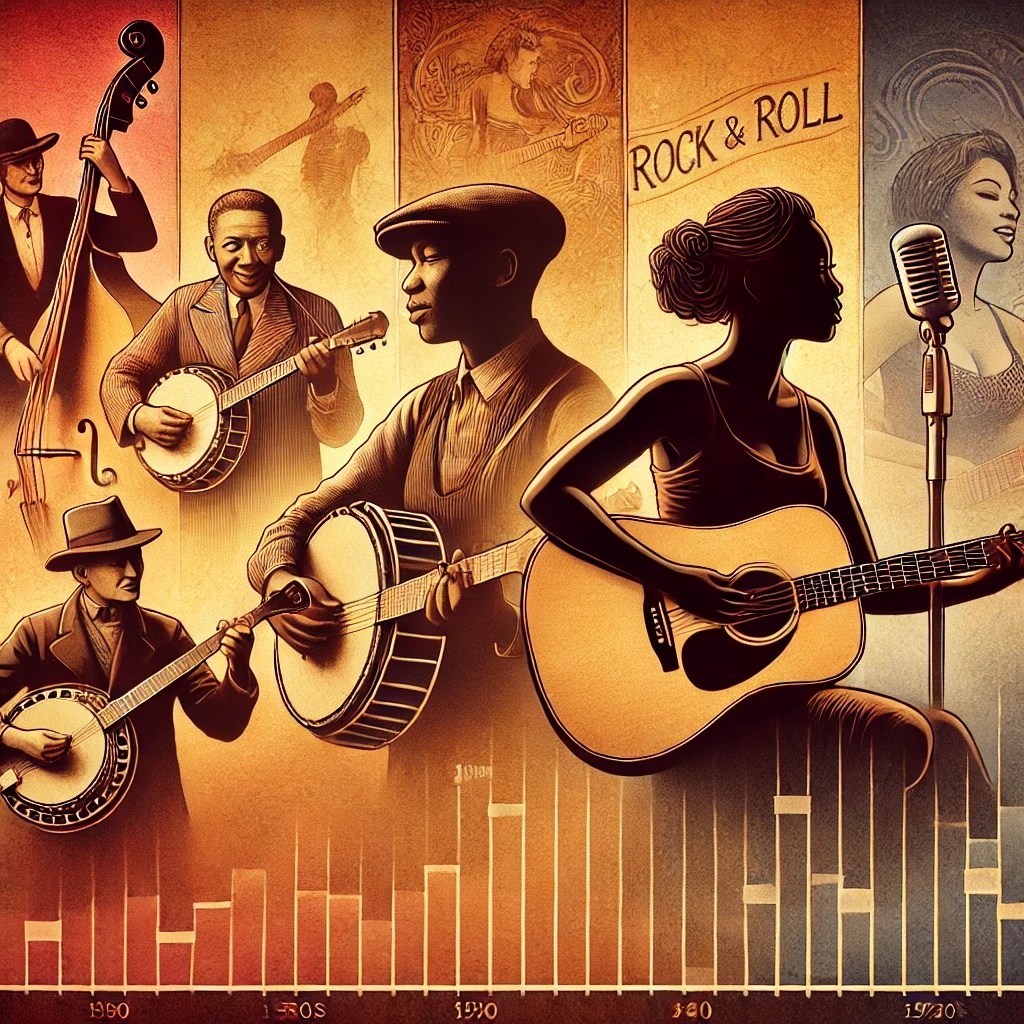
Country music originated in the Southern Appalachian region of the United States, blending influences from British and Irish folk traditions with African American blues, gospel, and work songs. While the industry that grew from it skewed white, the sound itself was shaped by diverse communities.
- The Banjo’s African Roots – The banjo, one of country music’s most recognizable instruments, was adapted from West African instruments brought by enslaved people. It later became central to Appalachian folk and early country music.
- The Blues Influence – The structure and storytelling elements of country music owe much to the blues, which originated in Black communities of the South.
- Black Country Pioneers – DeFord Bailey, a harmonica player and one of the first Grand Ole Opry stars, was a Black musician whose contributions were foundational to country music. Lesley Riddle, a Black guitarist, also played a crucial role in shaping the music of the Carter Family, often considered the “first family of country music.”
- The Oldest Known Country Song – The oldest known country song, “Thompson’s Old Gray Mule,” was recorded in 1891 by Louis Vasnier, a Black man from New Orleans. The song was discovered in Pennsylvania on a wax cylinder purchased at an auction, further proving that Black artists have been contributing to country music from the very beginning.
Despite these deep Black roots, the commercial country music industry largely erased Black artists from its mainstream spaces. The genre became associated almost exclusively with white musicians, leading to the false belief that country is inherently a “white genre.”
Rock & Roll’s Similar Story of Erasure
Rock & Roll, like Country music, is a product of Black musical traditions blending with other influences. The genre emerged in the late 1940s and early 1950s by fusing rhythm and blues (R&B), gospel, country, and boogie-woogie. Early pioneers of rock & roll include Chuck Berry, Little Richard, and Fats Domino, all Black musicians who laid the foundation for what became one of America’s most influential genres.
However, much like country music, white artists were often credited with “inventing” Rock & Roll, while Black artists who pioneered the sound were sidelined. Elvis Presley is widely known as the “King of Rock & Roll,” yet his style was deeply influenced by Black gospel and blues musicians — as he grew up in a predominately Black community in Tupelo, Mississippi, and attended services at various Black churches.
This pattern—where Black artists contribute to the creation of a genre but are later excluded from its mainstream recognition—is not new. And it’s playing out yet again in the debate over Beyoncé’s Grammy win.
Beyoncé’s Place in Country Music
Beyoncé’s move into country music is not an “intrusion” but rather a return to roots that have always been there. The backlash against her win echoes past resistance faced by Black artists who challenged industry norms.
- Lil Nas X’s “Old Town Road” (2019) was removed from Billboard’s country chart, despite blending elements of country and hip-hop—a move that many saw as an attempt to keep Black artists out of country spaces.
- Mickey Guyton, Kane Brown, and Jimmie Allen have all broken into country music, but often with challenges white artists don’t face, such as having their music questioned as “authentic” country.
- Beyoncé’s “Daddy Lessons” (2016) was rejected by the Country Music Association, despite having clear country influences and a performance with The Chicks (formerly Dixie Chicks) at the CMA Awards.
Now, with her 2025 Grammy win for Best Country Album of the Year, Beyoncé is once again proving that country music is not exclusive to any one race or background. Her album honors the genre’s traditions while also modernizing them, much like the early Country and Rock & Roll artists did in their time.
The Bigger Conversation: Who Decides Who Belongs?
The pushback against Beyoncé’s recognition in country music reflects a broader issue: who gets to define a genre and control its narrative? If we accept that country music is rooted in folk traditions influenced by Black and white musicians alike, then there is no valid reason to argue that Beyoncé—or any Black artist—doesn’t “belong” in the genre.
Instead of clinging to a false history that paints country music as exclusively white, we should embrace the reality: music is fluid, genres evolve, and the best artists push boundaries. Beyoncé’s win isn’t an anomaly; it’s a long-overdue acknowledgment that country music has always been bigger and more diverse than the industry has allowed it to be.
Final Thoughts
The controversy over Beyoncé’s Grammy win says more about the industry’s historical exclusion of Black artists than it does about her music. Country music was never just a white genre. Rock & Roll was never just a white genre. These genres were built from Black and white musical traditions coming together. The industry might have tried to rewrite history, but the truth remains—and Beyoncé’s success in country music is a reminder of that.
Additionally, we have seen white artists thrive in genres that have been predominantly represented by Black musicians, such as Rap, Hip-Hop, R&B, and Jazz. Artists like the Beastie Boys, Eminem, Jack Harlow, Post Malone, Iggy Azalea, in Hip-Hop, Annie Lennox, Jon B, Justin Timberlake, and Robin Thicke in R&B, and Frank Sinatra, Dave Koz, Kenny G, Lee Ritenour in Jazz have achieved massive success without their legitimacy being questioned based on race. Amy Winehouse blended these genres and included Reggae and Soul to her discography. Janis Joplin’s rock music was influenced by the Blues— as she got her start inspired by Leadbelly and Bessie Smith.
This demonstrates that musical genres are not defined by racial boundaries, but by artistry and innovation. The same grace and openness should be extended to Black artists in country music, just as it has been in other genres pioneered by Black musicians.

 Natasha