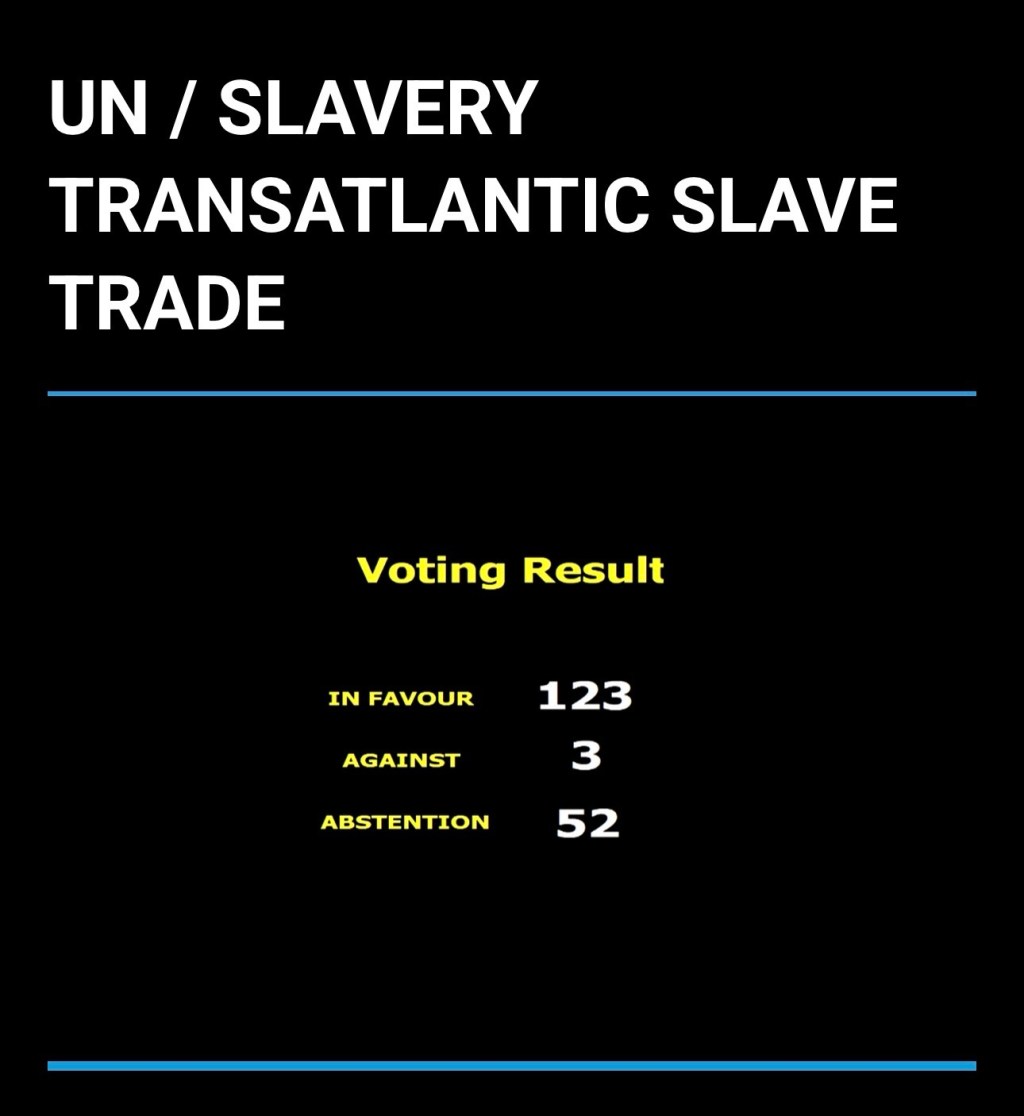
On March 25, 2026, the United Nations General Assembly adopted a resolution declaring the transatlantic slave trade the gravest crime against humanity.
I’ve read and listened to various viewpoints on the matter, just as I have over the past four decades, whenever someone dared to mention the idea of countries owning up to what was done and the impacts of profiting (for generations) on the enslavement and exploitation of a people, not just in one or two countries, but numerous countries, on every continent, except Antarctica (and a little cynicism would snark and insert a thought or two there).
The UN resolution, led by Ghana, passed with 123 votes in favor, three votes against, and 52 abstentions.
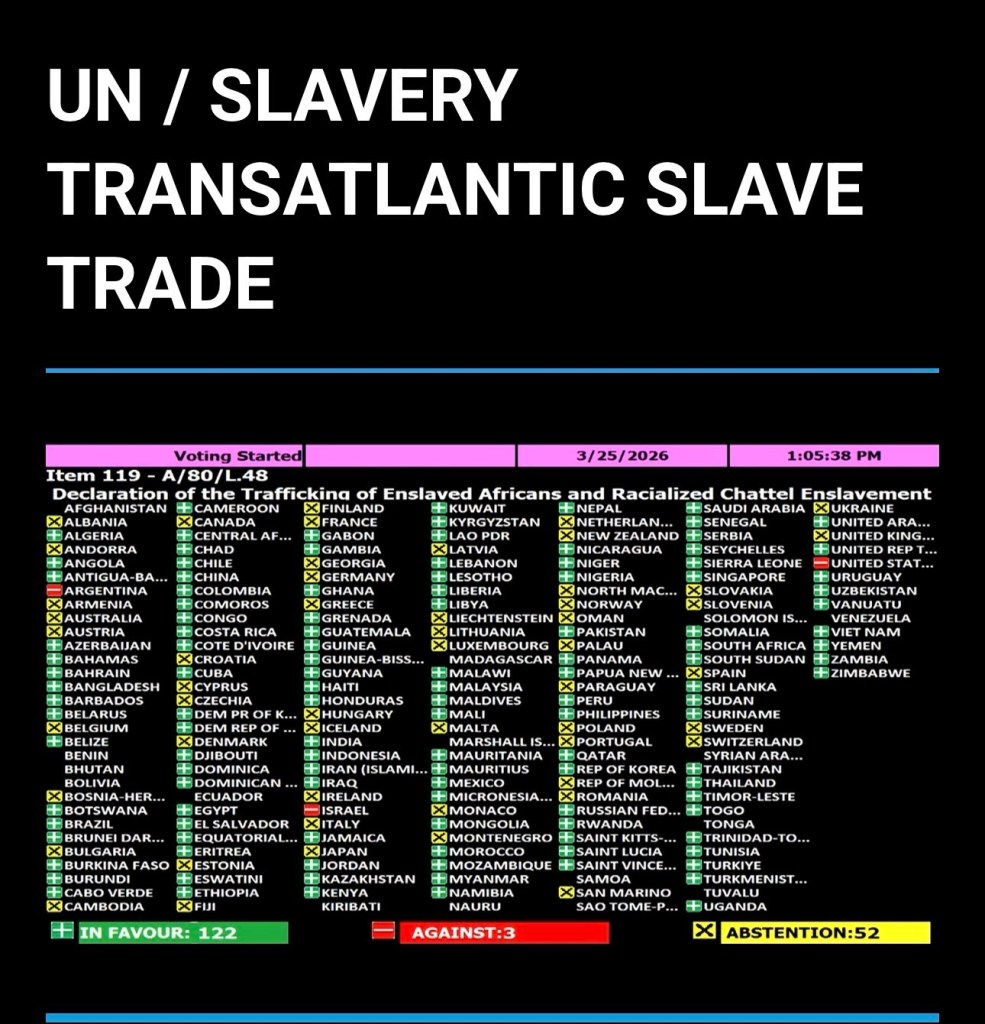
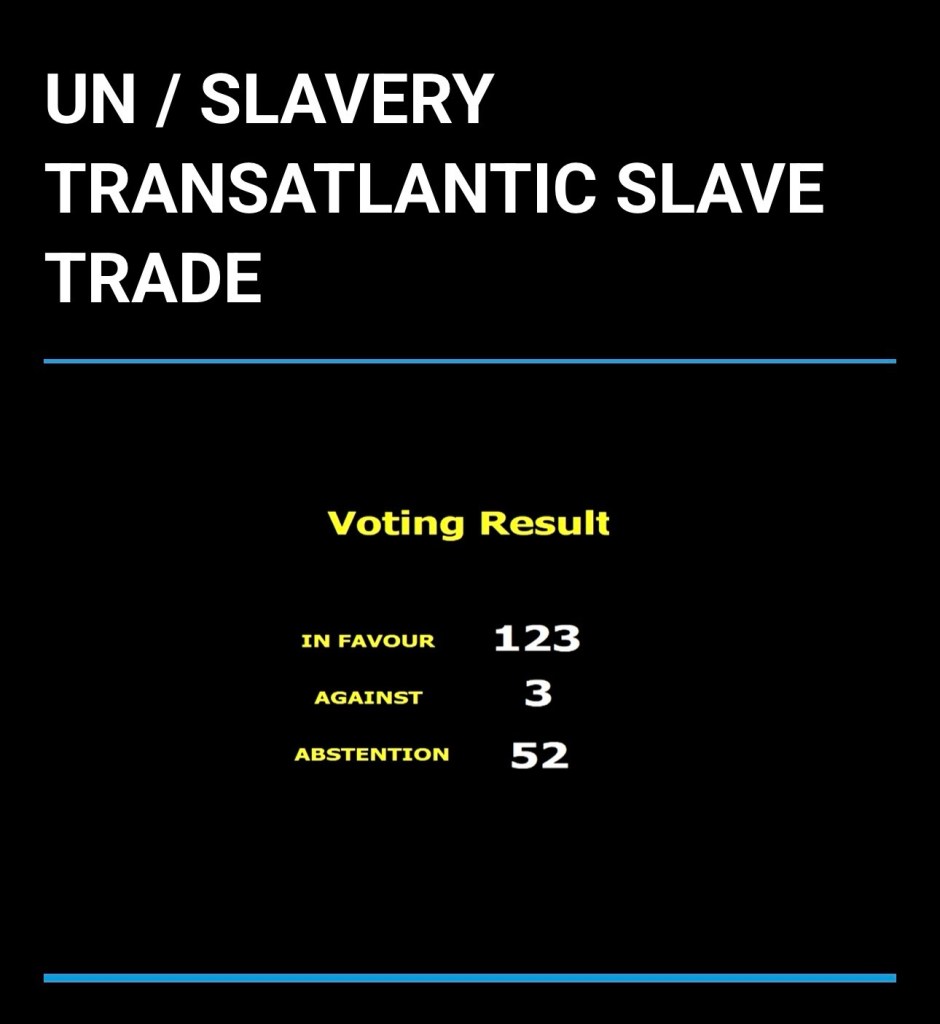
While the overwhelming support reflected broad international recognition of the historical significance of the transatlantic slave trade, the opposition and abstentions underscored continuing disagreements about accountability, reparative justice, and the role of modern governments in addressing historical harms.
While the vote itself was significant, and I’m not surprised by the vote results (for the most part), the discussions surrounding it revealed a larger question that extends far beyond the halls of the United Nations:
What responsibility do modern societies have to address the consequences of historical injustices?
Many scholars, policymakers, and advocates argue that the consequences of slavery and the dehumanization of Africans and their descendants remain visible today through persistent disparities in wealth, education, housing, political representation, and economic opportunity.
Supporters of the resolution viewed it as an important acknowledgment of historical truth. They argued that recognizing the scale, brutality, and enduring impact of the transatlantic slave trade is a necessary step toward justice, healing, and reconciliation.
Others raised concerns about what such recognition could mean in practical terms. Questions emerged regarding reparations, legal liability, and whether present-day governments and populations should bear responsibility for actions committed generations ago. These concerns contributed to opposition and abstentions during the vote.
The debate highlights a challenge faced by many nations and institutions: how to address historical wrongs without reducing complex histories to simplistic narratives.
History is rarely neat. It is layered, interconnected, and often uncomfortable. Yet avoiding difficult conversations does not erase their relevance. The question is not whether history continues to influence the present. Evidence suggests it does. The more difficult question is how societies should respond.
Should responses focus primarily on education and remembrance? Should they include economic investment in historically disadvantaged communities? Should they involve formal apologies, institutional reforms, or some combination of approaches?
Reasonable people may disagree on the answers. However, meaningful dialogue begins with a willingness to confront the historical record honestly.
The UN resolution does not settle the debate. It does not establish a reparations program, create legal obligations, or provide a final answer to centuries-old questions. What it does accomplish is the elevation of a global conversation about memory, accountability, human dignity, and the lasting effects of one of history’s most devastating systems of exploitation.
As leaders, educators, policymakers, and citizens, we should view this moment not as the conclusion of a discussion, but as an invitation to continue it thoughtfully.
History calls each generation to decide what lessons it will carry forward and what responsibilities it is willing to accept. The March 2026 vote serves as a reminder that the past is never entirely behind us, and that understanding history remains essential to shaping a more just future.
I will explore the historical layers, connections, and implications in future posts.
~ Natasha


